

21st April 2026...
so i was in London recently (maybe not so recently depending on when i finish writing this) and i was talking to my pal Momo. i was explaining some of the stuff going on with leatherdykes and the bar where we do leatherdykes and he talked about this idea that community should be like pinball. he even had a blog post about it. tight. i got home and read the blog post and we met up a few days later and talked about it even more. it’s stuck in my head. now i’m doing my own blog post. fittingly, leatherdykes is hosted at an arcade bar, so let’s go play some
Social Pinball
Scenes & Communities
Okay let’s start, as usual, with a quick caveat. I think Momo’s post uses the term “community” in a slightly ambiguous way. In this post, I’m going to delineate between scenes and communities, just for ease of communication here. These terms are kinda interchangeable in real life, but when I say a community I mean groups of people that arise around ongoing spaces of encounter. I am in community with the people in my tenement, the regulars at the dyke night, the STL crowd – stuff like that. Scenes are groupings of these communities and people, usually with some kind of through-line or affinity. I am part of the “Glasgow trans scene”, or the “Scottish kink scene”, or the “UK leatherdyke scene”. The leatherdyke night I co-run is a feature of all three of these scenes, but you can kind of think of it as its own community – or as having its own community around it. There is a community that is in tension/conversation with a lot of other communities as part of these different scenes. We’re not getting into all that right now; we’re just trying to delineate between these two things. A little disambiguation never hurt anyone.
Funnels
Okay let’s get into Momo’s post proper. We can build community like a funnel, if we so desire. This involves framing the outermost people who are still tangentially engaged with community as your audience, next closest are your followers, then participants, contributors, and the core of the community at the narrowest point of the funnel. Momo points out that these funnel frameworks are “unidimensional” in that “they describe a single spectrum of ‘engagement’ and rank people by where they are on this spectrum.” Great for marketing a product, probably, but not so great for much else. In this community, there is movement without choice, inasmuch as you, an audience member, are being pulled inwards by the draw of further engagement, but there’s nothing built in to engage differently, or to engage with anything else.
We can expand the funnel model to scenes. This involves ditching the corpo-speak and focussing instead on what the funnel is actually doing. It’s rewarding greater involvement with access to more exclusive spaces that you can get more out of. Audiences just get to watch, whereas participants actually get to play, for example. Let’s look at how this dynamic plays out in the Glasgow kink scene:
You arrive in Glasgow and you go to West End munch. You get to know some people there, but you’re not playing at the munch. After involving yourself with that for a while, you’ve met some people you know you can see at the local play event, Curve, which has some overlap in volunteers with the munch. You go to Curve and play with friends, but the rules are pretty strict and everything has to be negotiated with a DM. It’s playing, sure, but not at the most engaged level. After Curve, you’re allowed to go to Spike by Daylight – the sister event – and after you’ve made some regular play partners, you go to the regular Spike, which is at night and actually feels like the sexy play even you’ve been wanting this whole time. And you’re in community with the other kinksters who are actually playing rather than just hanging out at munches. Well done – you’re at the bottom of the funnel.
There’s still this movement without choice here (at least the way I’m framing it) because you can only really go down the funnel. Maybe you decide that SBD is great and you don’t want to go to an event that ends at 2am, but the choice is limited to where the movement stops. You’re still being pushed further down the funnel if ever you want to engage more. As an aside, this is also where these sorts of scene structures go wrong. If everyone only wants to be at Spike and no one wants to bother going to the munch or Curve anymore, you end up with a wonky looking funnel, where you have to engage with practically the most exclusive spaces to get to the best populated events; it’s just that the exclusivity is based on who is free on a particular Wednesday evening and has the energy to make it up Queen Margaret drive.
Graphs
So I’ve introduced these ideas of movement and choice. You can probably see where all this is going, but to tease you a bit more let’s think about what it means to have choice without movement.
We can imagine a graph (as in a graph theory graph with nodes and edges) as another model for community. As another little aside, I’m using model both to mean a framework for understanding something extant and for understanding how we want to build scenes. Everything is always in the process of being built so these are kind of intertwined definitions. Anyway. Momo doesn’t bring up graphs but I think this help illuminate something about the pinball point a bit more. Scenes that are like graphs involve linking up different communities without actually having an axis of engagement; instead, engagement is binary inasmuch as you’re either going to a community event or you aren’t. It’s a little more complicated than that considering there’s a difference between going to something once and going to something every time it’s on, but we can imagine there is a threshold for being part of “the community” for a given group. Whether that switch is determined by attendance or by involvement in the organising depends on the group itself, but certainly I know spaces where there is a binary difference between being part of “the community” and just being around in some capacity.
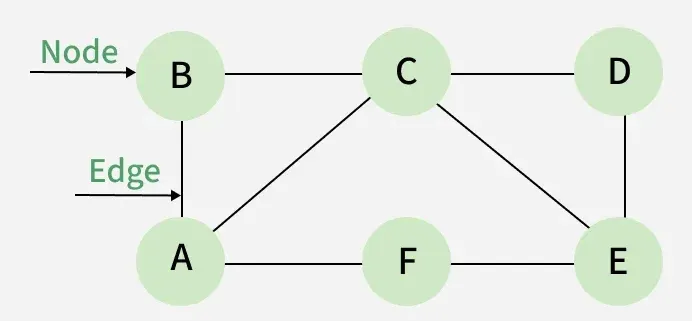
The gist of all this is that people in a scene have a choice of what communities to engage with and can find out about others from a given entry point. There’s no more involved; there’s only differently involved. Let’s take a look at this with a more concrete example in the Glasgow kink scene:
So, you’re going to RIG events, such as Curve, Spike, and SBD already. Great. You find out from people at RIG about some other events: Bratklub, Domain, and 404. These are three other nodes on your community graph, linked up by mutual participants. You now have a choice of what other communities to become a part of on your Glasgow kink journey. Do you want kink themed club night? Bratklub is probably the place then. Do you want a non-sexual kink event with a dungeon atmosphere? Domain events are for you. Do you want a sexual kink event with minor clubbing elements? Find someone to vouch for you to get into 404. If only some/none of these events sound like they’re for you, that’s fine, right? There’s no push to get involved at a deeper level the way there is going from West End munch to Curve to Spike. That’s because you’re not rewarded with more engagement, more involvement in a community; you only are involved in a different community that may or may not be suited for you.
To reiterate, this is choice of what communities to be a part of without a constant movement pushing you between communities. Any change to your community life has to overcome some inertia and arise from your own desire to do something different. This complicates the actual linking of communities because there can a kind of fostered insularity. If we imagine a scene as a graph of funnels, you are rewarded most for staying in one place, spending however much of your free time it takes to reach the bottom of a funnel with a given community. You probably don’t have the time to hit every RIG event, 404, Domain events, and Bratklub – unless kink is literally all you spend your time doing, and in that case you’re missing out on engagement with other communities in other scenes. So the links are there, but the inertia can be hard to overcome when we conceptualise – and as such build – scenes as graphs: yes choice, no movement.
Pinball
Now let’s get back to Momo’s pinball model. This is, obviously, a model of scenes that involves both choice and movement. If we think about this analogically, in a funnel things are pulled down by gravity, but there is only one direction to go; on a graph, there are many directions to go, but the surface is flat so there is nothing pulling anything one way or the other; on a pinball table, there is a slant to keep things moving, but there is still a multitude of directions to choose from. If we think about things less analogically, what’s going on is that engaging with substantively different communities within a scene is rewarding and fun. Momo lays it out for us pretty handily:
When I look at healthy communities [read: scenes], one thing I notice is that they feel like a patchwork of different cores [read: communities]. These cores are held together by a combination of gatherings taking place at various levels of depth. At the high level you have events which bring together many different people to get an idea for who else is involved and what kinds of activities are taking place. One level deeper you have events which can help people decide whether a specific niche is for them. Deeper still you have recurring events curated and directed specifically at people who are firmly in those niches.
What does building a scene actually look like with the pinball model? I can’t lay out things so (overly) simply as I did for funnels and graphs, so we’re going to break apart machine and talk about each of the components which makes social pinball work. The key thing to keep in mind is that there is choice and movement – everything on the table serves to both give people choices that they have a reason to make.
First up: the plunger. This is the equivalent to entering a scene. Momo states that “at the top of your pinball machine you want pins and gates (events which help people quickly decide which part of the board they will explore next)”, but we actually have to get to the top of the pinball machine first. This is usually, rather than a community event itself, achieved by supportive institutions, advertising, and fostering an atmosphere of inclusivity the types of events that act as the pins and gates at the top of the machine. If we think about this in a Glasgow context, the queer bookshop, Category Is, is an example of a plunger. Most queer people have a reason to go to their local queer bookshop anyway, and when they do, they are greeted with posters for every conceivable queer event in Glasgow, plus a friendly face to direct them to community events around town, plus a whole printout of all the different queer stuff they might want to try. This is what I experienced when I first arrived in Glasgow summer 2023 and it was genuinely life changing.
Next up: pins, gates, and bumpers. These are the types of events and communities that should actually make up the bulk of the scene. Pins and gates we’ve outlined about, but Momo also describes bumpers as “events which help people quickly decide if some subculture is for them, or which will safely bounce them away otherwise”. An example of pins could be a Small Trans Library event, which involves a mix of people in a chill setting each involved in a different constellation of communities. If you can break through the quasi-cliqueiness to ask what’s going on around Glasgow, you’ll be able to talk to all these different people about their experiences and figure out what you want to try – maybe even finding a pal to attend a new-to-you event with. Bumpers serve kind of the opposite function inasmuch as they’re low stakes ways to find out what you don’t like. They are events on some level designed for “bouncing off”. The Glasgow Leatherdykes bootblacking social fills this function in that it’s a chill evening of bootblacking, talking about bootblacking, usually doing a workshop on bootblacking, and comparing boots we’ve blacked – and you will hundy p know by the end of an event if bootblacking isn’t for you, but there are still people there (such as myself) who will direct you to other leather events you might like better.
Gate get there own paragraph because Momo (in conversation) brought up this idea of “constructive gatekeeping”. I fucking love this term. Gatekeeping gets a bad rap when really it has this both positive and negative social function. A gate will disallow people who do not fit the remit of an event from attending; however, a gate will allow people who fit themselves into the remit of an event. The latter there is “constructive gatekeeping”. Both these functions are important: the negative function maintains the vibe and integrity of an event through exclusion; the positive function constructs attendees who will reinforce the vibe an integrity of an event through their inclusion. One type of event that fits this description is a private play party. You might be aware that one is happening and that you are even friends with some of the attendees, but if you’re not into the vibe of no whimsy, heavy CNC play, this really isn’t the party for you. The way to get in would be to become the person who can be trusted in that environment and who would get something out of being there. This doesn’t mean the play party is good or bad necessary, or that those not meeting the criteria have some kind of moral failing, just that it’s not the sort of place for people who want to strap rubber chickens to their feet, and it’s important it stay that way to have a diverse and exciting scene.
To bring us back to a quasi-funnel model, next we have pockets. Momo describes these as “niche places for groups of similar people to cluster and hang out for a while”, saying that “[g]enerally there will be higher barrier to entry, in terms of skill or commitment required.” I think these sorts of events can overlap (though not necessarily) with bumpers. Let’s think again about the bootblacking social. While this is something that’s easy to bounce off in a productive way, once you’re in there’s an expected level of commitment and seriousness about the practice of bootblacking. We do 101s at every session for anyone who needs them, but it’s not the space for people who never want to move beyond a 101. This kind of resembles a funnel model, or could resemble a funnel model if that’s how you framed the community that arises around a particular event. I attended a private munch recently and that felt very bottom of the funnel, though in the context of a larger scene where this is a high barrier to entry event for this particular interest, the corpo vibes are wiped away and replaced with a sense of fulfilling a niche that’s good for the ecosystem of the scene. The munch involved the type of thing that’s not so easy to talk about at other munches, so it’s beneficial both for the attendees (who now get to chat about all this stuff) and the non-attendees (who won’t be forced to listen to us chat about all this stuff at their own munches) for this private munch to exist. Niches create/indicate diversity. Having lots of different events with specific remits is a more diverse environment than an ambiguated mass of interests within a couple of events. I’m getting ahead of myself. Anyway.
The last thing Momo brings up is flippers. These are “intelligent ways to to send [people in a scene] back up the board towards something they might have missed, or to help them create new niches of their own”. I think this is actually quite hard to conceptualise but we can probably imagine a few ways that the flipper affect might be achieved. Momo points out that “[t]his function tends to be performed not by events, but by individuals, who have been part of a broader scene for a long time and can help connect people across niches”, and while I think that’s true (Category is fulfils this function again; it’s not like they’re only putting the posters up for new denizens of Glasgow), I think that people who have been in the scene a long time can get stuck within their niches. In this way, it is making friends with new people who will get the stuck in scene elders to come back to a basic event (the pins at the top of the board) and give them a sense of what has changed, what new events are around. This is something that’s difficult to make an event out of, instead requiring fostering an atmosphere of friendliness towards new entrants to any given event and an individual willingness to forge relationships across experience levels. Failing to have flippers means that people might fall through “the gobble hole” (yes, that is actually what the hole between the flippers is called), which means falling out of a scene entirely. This is something we’ll get into later, but I want to indicate the consequences of not having flippers now.
This has been a long sub-section, but let’s drag it out just a little more. We can complicate all this by thinking about overlapping scenes. As mentioned previously, there is overlap between the “Glasgow trans scene”, the “Scottish kink scene”, and the “UK leatherdyke scene”. This overlap is both in terms of individuals and events. What’s important here is realising that events might fulfil different functions when framed as part of different scenes. The leatherdyke bar night, for example, is a bumper in the Scottish kink scene in that it’s a pseudo-cruising event with minimal oversight cause it’s a bar night, whereas it serves as pins for the UK leatherdyke scene, with any of the organisers and bootblacks being able to tell you what there is and where to go in the rest of the country for all your leatherdykery needs. Simultaneously, it’s a niche for the T4T dykes in the Glasgow trans scene who use it as their monthly community hangout where they get to dress and act how they feel comfortable, which tends to be off-putting to a lot of cis and vanilla people. Not every event has to be for everyone, but every event informs the vibe of the scene (even multiple scenes) as a whole. Let’s create social pinball that’s fun for everyone, even if not every event has to be where everyone ends up.
Prospects for Glasgow Leatherdykery
With all that in mind, where are we at with the Glasgow leatherdyke scene? (This sub-section is going to be inside baseball and then I’ll get us back on track.)
We have Glasgow Leatherdykes. Awesome. Glasgow Leatherdykes run two events monthly. That’s pretty frequent! One of these events is the bar night, attended by ~90 people, mostly not in leather, mostly uninvolved with “leather culture” (which I don’t mind). The other of these events is the bootblack social, attended by <10 people, mostly in leather, mostly pretty invested in bootblacking. There is also the fraternity (ily x), but they’re not really running events. There’s also the leathermen, but the leathermen aren’t dykes. So we’ve got two events – what functions do they serve?
Firstly, we do a lot of advertising, so there is a plunger. Insta is a plunger (and I hate to give insta any credit but it just does fill that role pretty well). Category Is is a plunger. Everywhere else we’ve got posters up is a plunger. The general buzz about the leatherdyke events acts as a plunger. People have opinions on them. Even if those opinions are bad, they give us salience.
Secondly, the bootblacking social is a pretty good bumper/pocket. Maybe a better way to imagine this is a raised pocket – you need a fair amount of momentum approaching to really get stuck in. So I feel pretty good about that. We’ve got a niche. It fulfils its role developing people’s skills and fostering commitment to bootblacking. It has a slow trickle of newbies entering but isn’t diluted to being an unfocussed socialising space or otherwise a space for newbies only doing constant 101s with nothing to reward repeated engagement. So we’ve got… one bumper and one pocket and they’re the same event. Right.
Thirdly, we have the bar night, which is really the pins at the top of the board. This is the big thing that gets people to meet up, meet each other, bounce around, and figure out what they’re doing for the rest of the month. We have space on the table for all the other leatherdyke events going on around Glasgow. This means the table is usually empty. Right.
Okay, so, looking at it like this, what we need for some proper social pinball are more bumpers, more pockets, and more gates. Actually, we also need some more pins. We get a pretty high attendance at the bar nights, but I know for a fact that there are some people who don’t like it, don’t vibe with it, want something a bit calmer or that skews a bit older or that is a bit more leather and a bit less T4T. These are all fair things to want, and it’s not an issue with the bar night that it is what it is; it’s only an issue that it’s the only event like it in Glasgow, best I can tell.
I can’t actually do the work here, I think. Glasgow Leatherdykes started with me whining to my flatmate on the floor of his living room that we don’t have a leatherdyke event, and then him giving me a look that let me know that we’d have to start one. We did, and here we are, and now I’m running an insta, a mailing list, a bar night every month, a workshop at the social every month, a bootblack contest, zine printing – and all that alongside STL, Glasgow Solidarity Pride, and actually trying to write some publishable material. This is not yr girl going all “woe is me”, just an indication that I’m not sure I would have the time to run another bar night aimed at dykes in their 30s and 40s, especially as someone who is not yet in her thirties and as part of an organisation that already has a reputation. Still, I can indicate events I would like to see. It’s my blog post and I get to choose the words I write.
So I want another broad community event that skews older and errs on the calm side. It doesn’t have to involve a higher proportion of capital-L Leatherdykes since that’s not really what it’s for. Instead, there should be more gates (such as high protocol events), more bumpers (such as a recurring lesbian darkroom), and more pockets (such as a motorcycle club, or a leatherdyke reading group). Instead, we have a scene where there is one set of pins and one niche. This means that people, if they aren’t interested in bootblacking specifically, don’t even realise there’s more to leather than just showing up and drinking with their dyke pals. There’s a culture that’s intertwined with power exchange, community service, theory, leathersex, and honestly just motorcycling about. Not all of that has to be for everyone, but everyone should know that all of that is there. Except they don’t, and in Glasgow, it isn’t. I am upset by this state of affairs. I’ve had enough of this whole section. Let’s get onto my
Lamentations
Okay, we’re playing pinball, and pinball should be fun, but sometimes it isn’t. Sometimes that’s because half the stuff that should be on the board has been ripped out; sometimes that’s because the person playing pinball thinks the game is unfair, that they should be allowed through the gates, or not be sent off course by the bumpers. These are the same issue because the game of pinball should explain how to play it. However, leatherdykes in Glasgow are playing a game of social pinball that’s basically non-functional. Imagine a window painted over with a view. We are looking at the view thinking that we are looking through the window. We cannot even realise that we need the window to be transparent because we don’t realise it’s opaque. This is all a bit abstract, so I’m going to get into some specific issues that arise while scene building with a social pinball model.
On “Bouncing Off”
To bounce off a bumper in a productive way, there has to be this sense of blame free disengagement. Arriving at an event that you think sucks doesn’t mean that the event has no value or that the organisers are running it wrong. I have heard friends complain about being babysat by DMs are Curve, for example, but that’s kind of the point of the event. RIG aren’t doing anything wrong by having restrictive DMs and rules for play. They are creating a specific type of event makes the broader scene more diverse. The only issue with my defence of Curve here is that it relies on there being a broader scene that’s worth engaging with.
Not to get all bitchy about kink events I don’t really go to, but I want to point out some issues that get in the way of bouncing off something productively. Firstly, if your pals only go to one event and you want to play with your pals and those are the people you feel safe around, it makes sense that you might want that event to change. Other events are not otherwise neutral spaces mechanistically determined by their rules. Instead, other events are run by people who are in community with other people and who might have a variety of grievances with each other. You might prefer the vibes of a more club focussed kink event than Curve, but if you don’t have anyone to go with, and your pals would make a big deal of you going, you probably end up going to Curve and feeling upset that it isn’t clubby.
The solution here is what? Make queer people get along and act like adults with each other? Let’s try to be realistic. Learning to build your own thing, especially in such a sparse scene as the ones we occupy in Glasgow, is essential to getting what you want. I believe in the free association of organisers, from each according to her ability to each according to her needs – but for community events. The real hurdle here is convincing people that they can do it. Mostly all you need is access to a printer and an email to advertise, organise, and run just about anything. There’s no secret. And when people know there’s no secret, it becomes easier to bounce off something without blaming the organisers.
On “Constructive Gatekeeping”
There’s this wider cultural push in queer scenes for “accessibility” and “inclusion”, the kind of stuff that’s opposed to gatekeeping in all forms. In the social pinball model, these are things that need to be weighed up against what the value of a particular community is within the context of the broader scene. Having a wheelchair ramp available at the bar night doesn’t come with any costs and allows access to people who are within the remit of the event (in this case, dykes who use wheelchairs), but we tell people it’s not the bar night for trans men who don’t identify as dykes. It is, after all, a dyke event. There has to be an inaccessibility for non-dykes in terms of atmosphere, and an explicit exclusion of non-dykes, for the bar night to remain a dyke night. Most people understand this.
There are other times and particular issues where the forest of the scene is either invisible or inadequate so we end up focussing on a tree. Awful turn of phrase but I’m not rewriting it because you know what I mean. Anyway. This comes up a lot when people ask us if the bar night is masked. The bar night is not masked. It is a bar night where people make out, eat, drink, smoke, lick boots, and do other things with their mouths. There is actually such a small proportion of time at the bar night that most people’s mouth are unoccupied. Not masking – to be clear – makes the event inaccessible to immunocompromised people. However, masking would make it a different event. Because of the UK government’s failure during the pandemic, the mass death and disablement that were caused by the state and the public’s inability to give a shit about other people, this is a touchy subject for good reason. This means that there is sometimes a moralised push to make queer events such as the bar night masked. If we aren’t masked, it is our fault for putting other people in danger. There is a gate where there should be open space. In much the same way that one might blame an event for bouncing off a bumper, people blame events for not being accessible. The actual issue is the same: it’s not that this one event in particular isn’t accessible, it’s that there’s not an accessible event.
The solution, I would say, is kind of the same as for bouncing off: encouraging people to make their own events. However, unlike bouncing off, gates have this dual function of being constructive. Gatekeeping should be done in such a way that someone who is halfway there can get all the way there. If there were a leather night that was, you know, Leather, maybe all it takes is buying a leather vest to fit the vibe just right if you’ve already got some Levi’s and a pair of Solovairs. But people often don’t see gatekeeping that way. I worry that if someone were halfway there for this hypothetical Leather night, they would think “Why even try?” rather than take the next step. There are actually three questions I have on constructive gatekeeping. Let’s lay them out here:
- How can we get people to see the constructive function of gatekeeping?
- Is it possible for gatekeeping to be constructive if no one meets the criteria?
- What’s the value in constructive gatekeeping events that make up an outsize proportion of the scene?
I’m not going to answer all these questions here because I don’t have the answers. My initial judgement is that, again, we need more events within a scene. If there are people who move across communities, they can help those who are halfway there get all the way there – but this relies on there being different communities with different gates to be moved across. Similarly, gatekeeping is probably only constructive if those outside an event can see an achievable vision of what the inside is like, but if no one is really leather (for example) except the organisers, then how is an attendee supposed to be leather? Events where more people meet the criteria can bring everyone up until that possibility of meeting the most exclusive criteria is imaginable.
The final question really makes me tremble. I want events that are specific in their remit, but I also want the people who otherwise don’t have a community event to go to feel welcome somewhere. This is the kind of thing that isn’t solved by just saying “well people should learn to run their own events” because the way you figure that out is by going to events, and to do that there needs to be accessible events – not gatekept ones. So, I don’t know. I feel a bit stuck running an event that is much broader in scope than I intended it to be, and I can’t just narrow it down at this point because what else is there for the T4T dyke who just wants a reasonably accessible space to hang out in Glasgow? On some level, I want God to send me an angel who will take over the bar nights for me. I wouldn’t entrust them to anyone else.
On “Overlapping Scenes”
The overlap of events between scenes is more of an issue than I made it out to be. Even if we can realise that an event might fulfil different functions as part of different scenes, there is still the issue of different social/cultural expectations. For example, leather cruising culture has very different notions of consent to contemporary kink culture. While for a T4T leatherdyke, your hand on their back might indicate interest and it’s up to them to shrug it off or not, a kinkster might take that as already a boundary violation since they didn’t give consent to be touched. It’s not that one of these frameworks is right and one of these frameworks is wrong; it’s that there are events where those in attendance are using one framework or another but everyone is still talking about “consent” as if it’s the same thing.
This goes for a tonne of stuff, right? The way people dress, the way they smell, the way they talk, what people do in public: it’s all stuff that ethically varies depending on the vibe (read: cultural context) of the event. And it’s not like events can just explicate their cultural contexts, or at least not to any productive end. Imagine if I posted on the leatherdykes insta like, “Hey! Just to make sure we’re all on the same page, the culture we’re trying to foster is modelled after the 70s gay scene in San Francisco. Make sure to read through Drummer so you know what the vibe is.” That, firstly, wouldn’t work because people wouldn’t read it, and secondly wouldn’t work because anyone who did read it would either bounce off the event or attend anyway but not pay any attention to this weird top-down shit we’re pulling. Rules go a long way if they’re enforced, but a lot of events aren’t really in the position to be rules heavy, both because that enforcement is near impossible (how are the seven people organising Leatherdykes supposed to check that everyone is getting verbal consent for every touch if that’s what we decided we wanted) and because it would make the event suck.
So, okay, I guess this is where I bring up that my overarching project is to try and explain to everyone that everything is ideology and that framing is what creates the thing and that basically nothing comes prior to understanding it in a social context. There is not a thing that is “consent” which some communities are right about and some communities are wrong about; there is only notions of “consent” within those communities that suit different people differently well. So many of the fights that we get into online and with each other come from not understanding the way these different contexts construct our notions of ourselves and everything we do (my flatmate is in fact talking to me about this right now in the context of D/s vs M/s even though I’m trying to write my blogpost). What’s the solution? I don’t fucking know dog. I wish I knew. On an individual level, I try to understand what any given disagreement is in specific before I get into an argument. Usually it’s just one thing, and understanding that one thing is essential to not be talking at cross purposes with whoever it is I’m arguing with. Maybe our disagreements can even become productive. One can pray.
On “The Plunger”
So I’ve described plungers already, but perhaps plungers also play into understanding the cultural context of the events and communities that they lead to. This is what, like, a 101 is for. A 101 is a class or introductory event of some description that gets people from having no understanding of something to some understanding of something. Ideally I think they should also convey what there is to be understood (because you have to know what you don’t know to learn anything). These 101s also act as plungers. This is where the pinball analogy doesn’t make as much sense because that’s a pull from an event for newbies rather than a push from the bottom, but both these things are plungers inasmuch as they encourage people to get into a scene at all.
When we think about the plunger as fulfilling the role of not just getting people into a scene, but explaining what the scene is, we realise what a mire we’re in. Where is our intro to leatherdykery event? We’ve got the bootblack 101s, but that’s pretty far down the table already. Ideally, the advertising and social media presence for the sorts of events that are both pins and plunger should function this way, but it’s an uphill battle. Saying stuff like “leather and denim encouraged” doesn’t give the impression of leather & Levi’s bars if the people taken in by the advertising don’t know what those were – regardless of what it means to the organisers. Similarly, posting a code of conduct or a series of videos about the culture on the insta doesn’t mean that people will engage with them. Even if they see it, there’s no guarantee that impression will survive contact with the actual event.
We could always just run introductory events, but once people are in a scene they often think they’re past needing those. They have vibed it out, one might say, and that means it’s difficult to get them to go back to the plunger stage when they’re already playing pinball. My flatmate has suggested running 201s that are really just 101s to get people along. This is, firstly, really fucking funny, and secondly a weird trick that does not solve the overarching issue with the construction of our social pinball table – there remains an atmosphere of disengagement with introductory events, which is unproductive. I think a more sensible strategy is integrating events across a variety of skill levels, so that newbies can come along and see how more experienced people do it while also getting their own 101s. This is easy in the case of the bootblack socials, but perhaps harder in the case of kink events where it’s not entirely obvious what the technical skills needed to do something well are. Anyone can pick up a whip, hit a play partner with it, and even end up with a decent enough scene, but if you’re doing that then you might not think you need a 101 on whips because you know enough to get by. And even if you were amenable to a 101, what spaces are there that have that on tap like the bootblack socials? My flatmate brought up the idea of house dominants for kink events who can also fulfil this function, but that relies on there being the people already in the scene who have put that effort in, want to share the knowledge, and know how to give a good 101.
For non-technical skills, what does all this even look like? I have been weighing up the value of proposing a club/membership structure for Glasgow leatherdykes with enforced introductory material. This wouldn’t be for the bar nights, but maybe you get a gay little patch or something and can come along to some cigar socials or whatever. There’s a particular draw to further engagement (funnel-esque), and so this is a kind of plunger that squeezes new entrants to a scene through the process of constructive gatekeeping, I suppose. I mean, none of these different things I’ve been talking about are really that distinct, right? We’re working with a model that’s supposed to illuminate some dynamics of the way Glasgow leatherdykery is playing out. Anyway. My point is that expecting people to come to an intuitive understanding of a new social context clearly isn’t working and we need to find ways that are fun – that are within the game of social pinball – to explain how to play.
On “The Gobble Hole”
I can’t believe this fucking thing is called that. Alas. The gobble hole is dropping out of a scene. In the Glasgow leatherdyke, T4T, whatever scene we can think of it as moving on to some kind of normative life, usually. You meet someone at a bar night, you start dating, you stop enjoying picking up scroaty scrandoms, then suddenly you’re moving in together and are too busy to go to the events. I’ve seen it happen. Hell, it could have happened to me.
This is, like, neutral. Scenes and communities (generally) want through-flow. How quick that through-flow is depends on the community: for STL I think a couple months for people to make friends, get some confidence, find out about other things in Glasgow before moving on works pretty well; for the bootblack socials we’ve got a workshops planned across the entire year, so it makes sense for people to stick around until we start to run it back for a new set of bootblacks. Sticking around in a group isn’t a bad thing (I am very sticky when it comes to engagement in community groups), but everyone sticking around either makes something cliquey to the point of complete inaccessibility, or growing at a pace which can’t materially be sustained (for example, we could not fit 50 people every week at the venue for STL so it’s essential that some people engage for a while and then drop out).
Still, we do need some people sticking around. There is a lack of leather elders in the Glasgow leatherdyke scene. That’s not like anything we can do anything about, right? If they’ve all gone down the gobble hole, the only thing to do is entice them with a plunger, but until they show up at my events I literally cannot know where or who the elders are. I guess the only thing to do, really, is encourage people to stay in the scene knowing that we won’t catch everyone, but maybe we will keep enough people to generate some leather elders in a few decades time. Part of this means resisting the false allure of normative life: getting married, moving to the suburbs, whatever form your social suicidal ideation might take (I fantasise about cycling out to Lewis and camping on a beach until everyone forgets I exist). Part of that resistance involves creating a leatherdyke scene worth living in, a scene with an emphasis on mutual aid, community support, and transformative justice to give people real reasons to stay. We are part of the scene between events, and we can act like it.
Things Are Real
And yet we are still fucked. Okay! okay. ok. so. so…
ugh right so i was in london at the bishopsgate institute a couple weeks (same day i met up with momo the second time) and i was looking through the london blues scrapbook. beautiful scrapbook. weird royalist gay men’s uniform club but the scrapbook was beautiful. there were newsletters from 1978 detailing how they weren’t getting the respect they deserved from the bar manager. they had to change bar three or four times in the first two years of operation. they ran a trip in the early 80s to alton towers and 40-something people rsvp’d and 14 people actually showed up for the coach which they still had to pay for undiscounted. the newsletter was very snippy about that one. i laughed out loud in the archives. anyway, my point is that we have been dealing with existing in material reality for as long as we have existed in material reality, which is forever.
ggow has pretty harsh licensing laws. it’s nigh impossible to get a venue licensed for sex. so we’ve got cj’s. cj’s, as anyone will tell you, is not a very sexy venue. we make it work, but it’s hard work (pun intended ig). the ggow dungeon has closed. it closed well before i arrived here. they used to actually host pretty regular stuff that wasn’t too expensive. who even has money for tickets to a kink event every month nowadays, let alone multiple? so the situation we’re in is that it’s a non-trivial financial decision to attend an event at an out of the way ex-office building that still kind of smells like smoke and has the tackiest art possible up on the walls. and no one can just pull together the capital to start a new venue. and even if they could the council wouldn’t allow it. so it’s cj’s or someone’s flat.
with the bar nights also, like, i love the bar we go to but it’s not a queer bar. it’s a commercial venue. they don’t want to get in trouble with licensing authorities for people being dumb (fair enough) and they want their staff not to have to deal with unshowered twenty-somethings going through second puberty (also fair enough). but these aren’t just issues with the attendees, right? or they’re not issues that sprout from some kind of moral deficiency of leatherdykes in glasgow. instead, the excessive energy of the bar nights comes down to this being the only time that ggow feels like it has a dyke bar at all, this one night a month. it’s thirty days of bottled up t4t dyke energy released over only four hours on a wednesday evening. you get how that ends up being a lot, right? and because we’re the only game in town, some of our attendees are only really going out at our bar nights rather than learning the ropes socially at other, calmer bars and nights out. if we had an actual ongoing space of encounter, a brick and mortar dyke bar, we could spread out that energy and made it more sustainable rather than something that strained otherwise friendly relationships.
so we have a scene without foundations. we have none of our own institutions, no mineshaft, no catacombs, no gold coast. we exist in the cracks by – not quite lying, right? but – imitating an event for a scene we don’t exist within to the institutions of that scene and then managing the contradictions that arise between our spaces of encounter and those doing the encountering. i held my breath while a bartender told me about two guys she caught fucking in the toilet at another event, as if i would find that outrageous by default. we are, almost certainly, going to get kicked out of the bar we do our bar nights at at some point. we are, almost certainly, going to lose the queer bar we do the bootblack socials at at some point unless their kofi takes off (so if you’re reading this and have some money go subscribe to it). so what’s left? do we just hop from new bar to new bar every so often, wearing out the goodwill of both our attendees and another set of bar-staff along the way until we go on hiatus and let something new come along to take our spot as the de facto t4t night? that sounds cynical and unproductive. let’s end on something less nihilistic than usual.
we need a scene that knows and values itself as a scene. we are probably going to have to start running things out of people’s flats. we are going to have to create social structures that get people invested and up to speed with the plurality of expectations, contexts, and possibilities within the scene while still allowing for choice and movement (i loathe the leather family BECAUSE we need better ways of doing this). we will not get anywhere by callouts and cancellations and we should really recognise that as soon as possible. as much as everything else, we need to understand the events we run and attend as having value even when they are not for us, even when they lose attendees, even when they go wrong. to misquote momo: few people actually enjoy having a bunch of correct opinions about how everything except the two things they do suck – playing pinball is much more fun.